Have you heard the expression “clothes make the man”? Well, if one likes the causal look of a loose fitted colorful shirt as something you would see in the Caribbean, then Indonesia is the mother load!
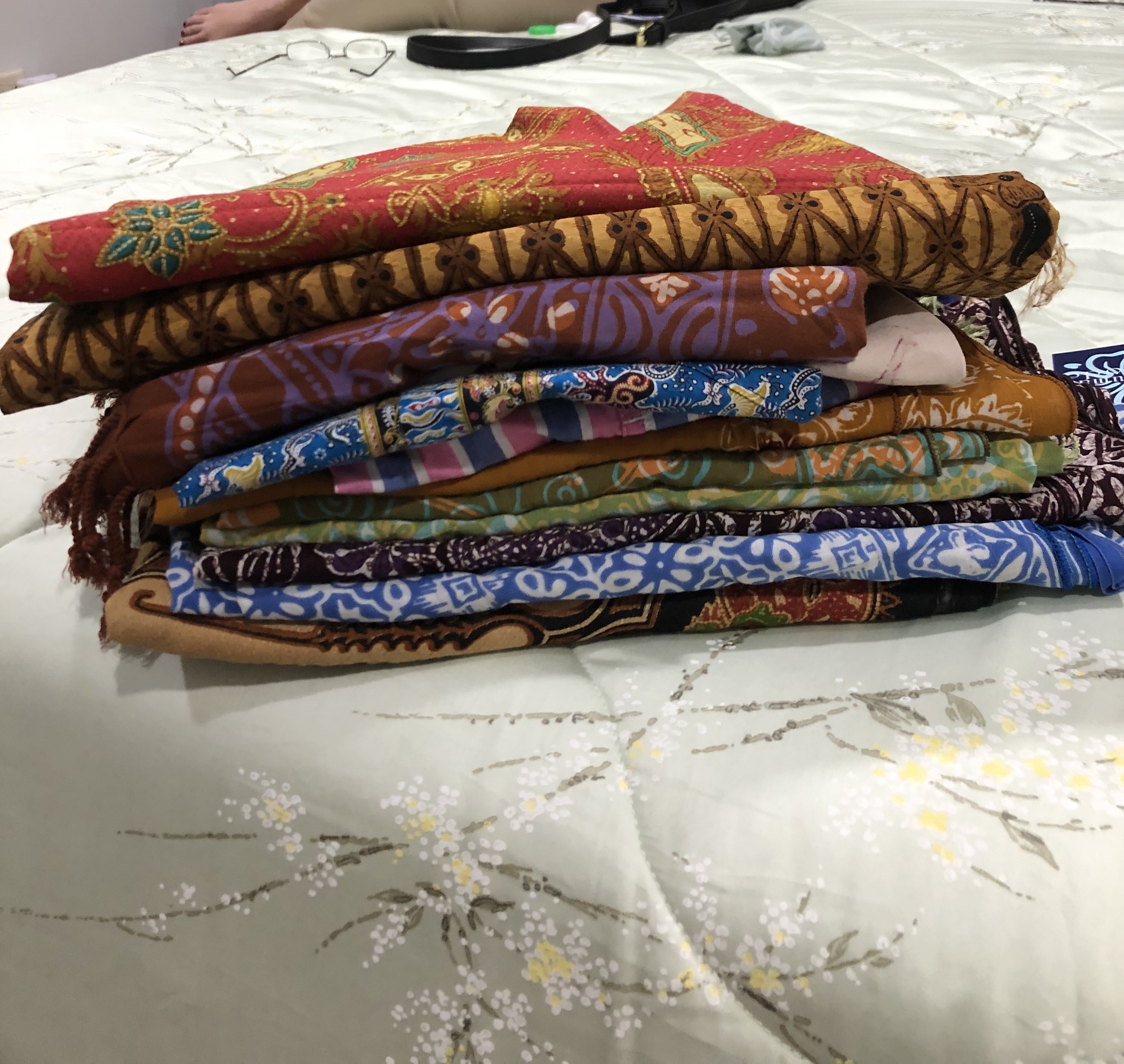
Batik is both an art and a craft, which is becoming more popular and well known in the West as a wonderfully creative medium. The art of decorating cloth in this way, using wax and dye, has been practised for centuries. In Java, Indonesia, batik is part of an ancient tradition, and some of the finest batik cloth in the world is still made there. The word batik originates from the Javanese tik and means to dot.

Who knew that years before we even considered an adventure in Indonesia, I started “dotting” in my own way! To make a batik, selected areas of the cloth are blocked out by brushing or drawing hot wax over them, and the cloth is then dyed. The parts covered in wax resist the dye and remain the original colour. This process of waxing and dyeing can be repeated to create more elaborate and colourful designs. After the final dyeing the wax is removed and the cloth is ready for wearing or showing.
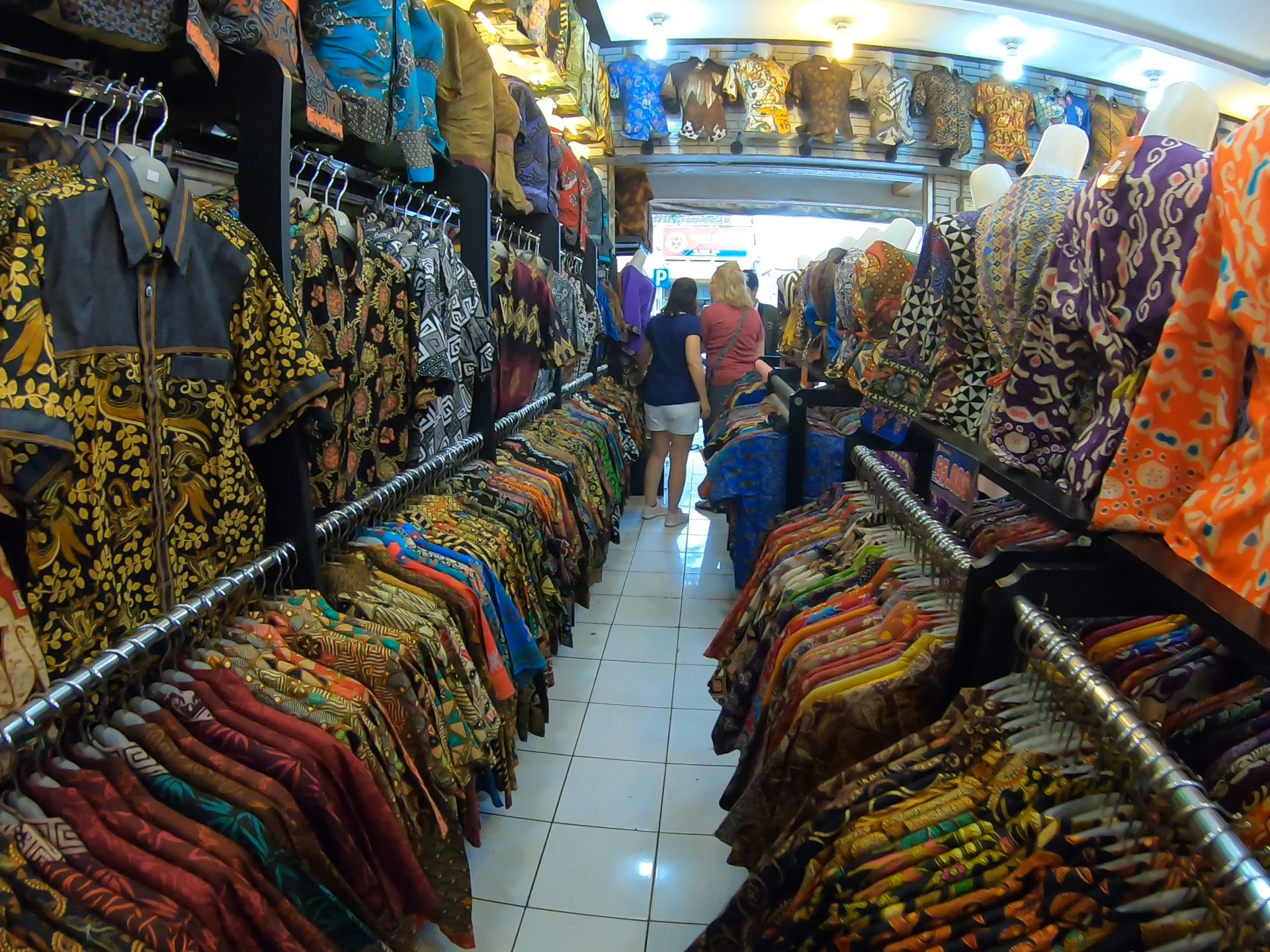
Contemporary batik, while owing much to the past, is somewhat different from the more traditional and formal styles. For example, the artist may use etching, discharge dyeing, stencils, different tools for waxing and dyeing, wax recipes with different resist values and work with silk, cotton, wool, leather, paper or even wood and ceramics.
Batik is historically the most expressive and subtle of the resist methods. The ever widening range of techniques available offers the artist the opportunity to explore a unique process in a flexible and exciting way. I just had to come back with some more of them to add to the one that my good friend Ron Weinbaum gave me as a gift. For about $6 each I could not pass the opportunity!!

There is nowhere in the world where the art of batik has been developed to the highest standards as in the island of Java in Indonesia. All the raw materials for the process are readily available – cotton and beeswax and many plants from which the dyes are made.
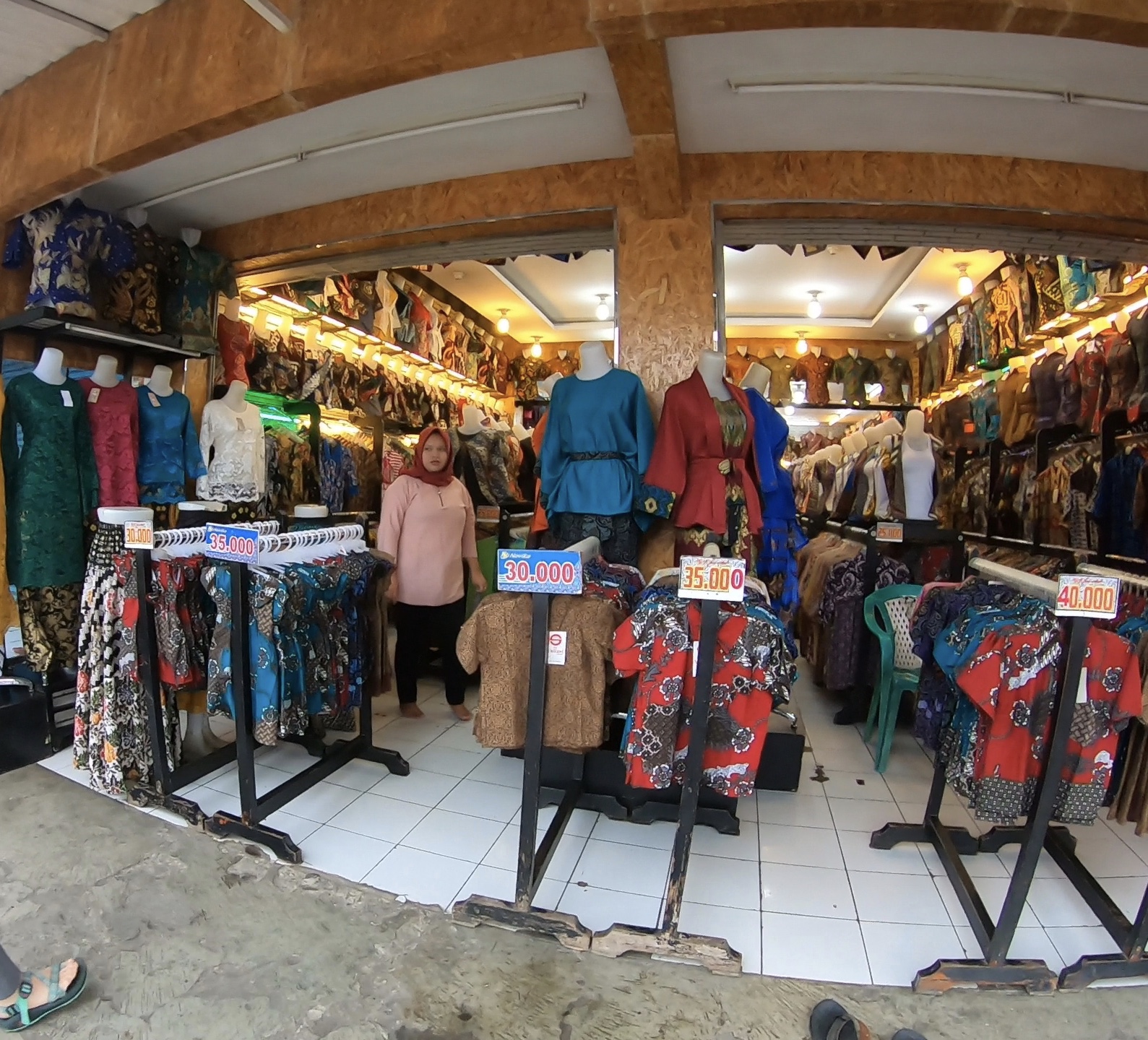
It is not known when the batik was first made but the traditional skills were particularly well developed over hundreds of years in Central Java around Yogyakarta and Solo under the patronage of the Sultan and his court. Designs were copies and in some cases the cloths could only be used by certain people or on certain occasions. The royal families had their own proscribed designs. On the coast designs were developed differently, influenced by settlers from China, the Dutch colonists and traders from India and Arabia.

Let’s put it this way–As we are evaluating what items to take and how to economize on space and luggage weight, I feel that once we arrive to our new destination I will be purchasing for myself a new “look”. For $6 a shirt, I have to.
 Why Not Indonesia & Japan -- By, Ismael Sapoval
Thanks for the batik education, your highness!
LikeLiked by 1 person
I must admit. I didn’t know any of this. Thanks for enlightening us.
LikeLike
Very interesting—and I’m so glad that the Lord crossed our paths this morning. I’ll be praying for you and following your blog!
LikeLike